


ASTAG does not want to stifle CO2 balance with LSVA increase
May 19, 2022 at 7:04 PM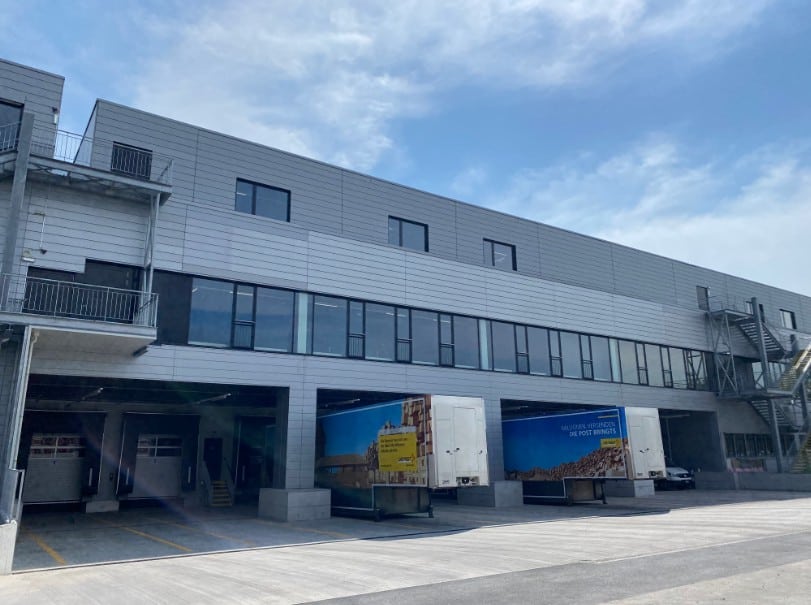
Swiss Post Opens New Parcel Center in Rümlang (ZH)
May 22, 2022 at 11:20 AM
In collaboration with the Institute for Supply Chain Management (ISCM-HSG) at the University of St. Gallen, Loginfo24 will now publish new insights from supply chain research on an ongoing basis. We will provide concise reports on practice-relevant innovations from dissertations and other publications by young researchers at ISCM-HSG. The publications, along with relevant source references, can be found in the “ISCM Publications” section.
The first contribution comes from Raphael Preindl. He addresses the topic of urban logistics systems (ULS).
(St. Gallen) The emergence of challenges in urban areas around the globe, including urbanization, a rising volume of e-commerce, and changing customer preferences leading to increased traffic and emissions, has made the components of the concept known as ‘urban logistics’ a strategic priority for many public and private actors in recent years. These challenges are expected to continue growing in the future. Consequently, countermeasures in the area of smart city logistics are in high demand.
While the basic idea of urban logistics—coordinated delivery and pickup of shipments across companies—can be traced back to the 1990s, a thematic “broadening” has been particularly noticeable over the past decade, largely due to technological advancements. More and more conceptual components—such as delivery robots or underground transport systems—are being added, which can be integrated into so-called urban logistics systems (ULS). While there is no shortage of ideas, many pilot projects fail for various reasons that can be classified as implementation barriers.
Overcoming Implementation Barriers
To overcome these implementation barriers, innovative concepts are needed that focus not just on urban logistics itself but on its specific characteristics and especially its implementation. These innovative concepts should ideally be adaptive, meaning they are detached from a specific situation in a particular urban area and thus transferable to different cities. In such a starting situation, it is always advisable to consider so-called success factors.
Regarding the implementation of ULS, various success factors can be derived, regardless of the individual project.
Success Factors
- Formation of a consortium with representatives from all relevant local stakeholder groups, particularly local politics, with a central person or department as the responsible party, aiming to consider all interests for the ULS.
- Appointment of a neutral coordinator to manage the ULS implementation project, for example, by establishing a joint venture to ensure successful partnerships.
- Development of a ULS concept tailored to the local context, focusing on realistic solutions to ensure feasibility.
- Prioritization of ULS measures with a phased division into several pilot projects and a consolidation plan to ultimately create a complete ULS.
- Pursuit of a long-term perspective for ULS-related measures to ensure the transition to day-to-day operations after implementation.
Verification via Contingency Analysis
While orientation towards the aforementioned success factors provides a solid foundation for the implementation of ULS, it is certainly worthwhile to analyze the specific urban area where the project is to be implemented more closely. This examination can be conducted through a so-called “contingency analysis,” which deals with situational factors. In the case of ULS implementation, three different types of factors can be identified:
- Exogenous factors: Factors that have an impact across cities, for example, at the national level.
- Specific urban factors: Factors that are individually pronounced in each city.
- Endogenous factors: Factors determined by the respective stakeholders.
Foundation for Promising Implementation
Based on this contingency analysis, a ULS tailored to each urban area can be created in combination with the generic urban logistics concept components. This approach aims for a high “fit” between the local conditions and the ULS, which forms the basis for a promising implementation. However, it is particularly important to note that this “fit” may change over the course of the implementation period, for example, due to changing requirements for the ULS or changes among the involved actors. In light of this dynamism, an iterative implementation of ULS is advisable. Therefore, a hybrid project management approach is recommended, combining elements from the classical waterfall method and an agile approach.
Suitable Implementation Management
While an iterative approach to ULS implementation can serve as the starting point for various implementation projects, several other elements must also be considered. A suitable implementation management must address questions regarding the timing of implementation, the style of implementation, and the direction of implementation. Furthermore, continuous evaluation loops should be conducted throughout the entire project, for example, based on selected performance indicators, so that short-term adjustments can be made in the context of an adaptation analysis.
Revenue Planning and Control Often Falls Short
In addition to the operational aspects of ULS implementation projects, various elements must be considered that are essential for project success. Since the focus has often been solely on operational implementation—frequently with extremely pragmatic but sometimes short-sighted approaches—implementation planning and control are often neglected. In light of these findings, it is advisable to direct future efforts towards enhancing innovation capability and focusing on the implementation of ULS rather than on innovating urban logistics concept components themselves, so that nothing stands in the way of successfully implemented ULS.
Raphael Preindl was a research associate and doctoral candidate at the Institute for Supply Chain Management at the University of St. Gallen (ISCM-HSG) from 2018 to 2021. Previously, he completed his master’s degree at the Alliance Manchester Business School and gained professional experience in management consulting and freight forwarding. He is a lecturer at the Duale Hochschule Baden-Württemberg. His doctoral thesis focuses on the implementation of urban logistics systems. The work was published in the spring of this year by Springer Verlag and can be accessed here: https://bit.ly/3sCfzSA
Photo: © Loginfo24/Adobe Stock