


DB Schenker and MSC Launch Extensive Use of Biofuel
Feb 16, 2023 at 5:00 PM
RailCom in Dialogue with Railway Companies
Mar 16, 2023 at 3:45 PM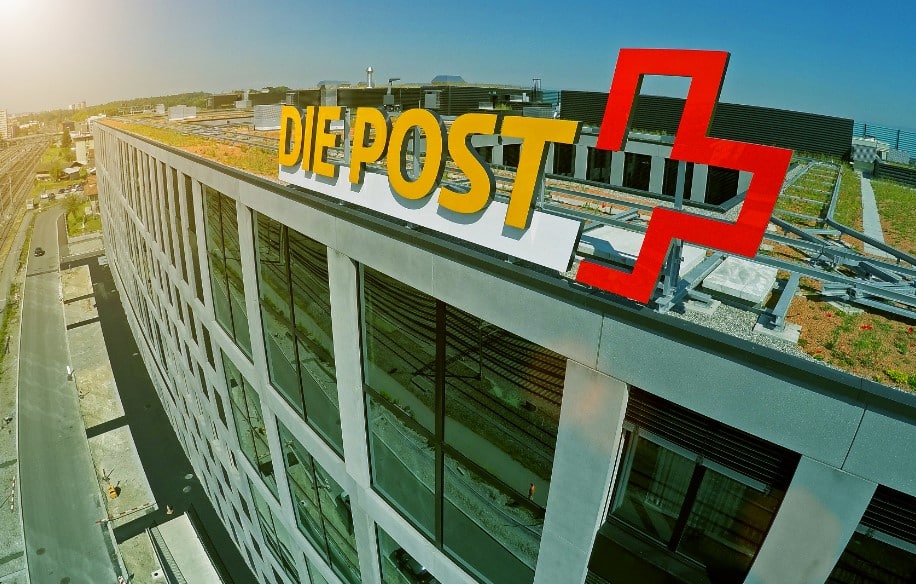
The Swiss Post generated a group profit of 295 million francs and an operating result (EBIT) of 358 million francs in 2022. The result is below the strong previous year but continues to strengthen the Post’s balance sheet. The year brought several unexpected factors into play due to the aftermath of the pandemic and the war in Ukraine, which affected not only the world but also the Post’s business. After the halfway point of the strategy period, it is evident that the Post’s strategy is working: The Post is robust and prepared for a very challenging year in 2023. The Post will consistently continue on its chosen path to meet the needs of people and businesses in Switzerland in the future.
(Bern) The operating result (EBIT) of the Swiss Post in 2022 is 358 million francs, which is 157 million francs lower than that of the previous year. The group profit amounts to 295 million francs in 2022, which is 157 million francs less than in 2021. The year 2022 brought several unexpected factors, particularly due to the war in Ukraine, which had significant impacts on the Post. Additional costs due to record inflation, lower revenues due to the interest rate turnaround, and declining letter and parcel volumes affected the Post’s business. However, a positive free cash flow was generated in 2022, which flows into the Post’s balance sheet and increases its liquidity. As a result, the Post’s balance sheet is even more solid than before the Corona crisis. Roberto Cirillo, CEO of the Post, expressed satisfaction with the Post’s results in this context: “The Post has managed a very challenging year well. Last year tested us significantly due to the volatile global and economic situation – the employees in the branches, in the parcel and letter centers, in delivery, on the road in the postal vehicles, and not least the management. We are pleased that our balance sheet is so robust and that our strategy has put the Post on a stabilization path for the long term.”
Pressure in the parcel market has increased
The volatile global and economic situation affects the individual business areas of the Post differently. Logistics services and PostFinance contribute the most to the financial result. In the logistics business, the Post achieved 358 million francs last year. This places the logistics services sector 107 million francs below the previous year’s level. However, the result is acceptable given the challenging framework conditions this year. Persistently high inflation, increased fuel and energy costs, and higher procurement costs for operational and construction materials led to significantly higher costs in this area last year.
Both parcel and letter volumes decreased by around 4 percent compared to the previous year. The decline in parcel volumes is partly related to the depressed and very volatile consumer sentiment. This has noticeably decreased since the outbreak of the Ukraine war – people ordered less online. Global supply shortages as a result of the Corona pandemic also led to many retailers being unable to produce or deliver their goods on time in 2022. Consequently, particularly in the second half of the year, fewer parcels were in transit. Letter volumes have decreased by about one third over the past ten years. This trend continued as expected in 2022. Although the price measures implemented by the Post in 2022 had a stabilizing effect on the result, they could not financially compensate for the decline in letter volumes.
Despite the decline in volumes in 2022, the long-term trend towards online shopping remains unbroken. People have become accustomed to shopping online. Compared to 2019, the Post transported 30 percent more parcels last year. The comparison with 2019 shows that the long-term trend for parcels is upward, although significantly less pronounced than in the two Corona years. Therefore, the Post will continue to invest in parcel processing and renew and expand regional sorting centers.
Interest rate environment impacted PostFinance’s results – Outlook improves
PostFinance achieved an operating result of 229 million francs, which is 43 million francs lower than the previous year. The main reason for this was the 45 million franc lower interest income. The elimination of negative interest rates had a significantly greater impact than the higher income from financial investments that accrued over time. However, PostFinance was able to expand its position as an investment bank in 2022. For the first time, the volume of e-asset management exceeded 1 billion francs. PostFinance also launched the new PostFinance Card. Thanks to the combination with the Debit Mastercard®, customers can pay in all stores, restaurants, and online shops that accept Mastercard, both in Switzerland and abroad, in addition to the existing payment options. Due to the historic decision of the Swiss National Bank (SNB) to return to positive key interest rates, PostFinance abolished account fees for private and business customers as of October 1. PostFinance welcomes the shift towards a positive interest rate environment in the interest of its customers. This allows PostFinance to pay interest on savings and retirement accounts 3a again. The interest rate turnaround also offers the potential for higher profitability in the future.
The Post is already collaborating with various strategic partners in the branches
In the PostNetz segment, the operating result in 2022 remained stable at –71 million francs (EBIT 2021: –68 million francs). Traditional counter businesses in the Post branches also saw a decline, particularly in payment transactions. Here, PostNetz recorded a decline of around 15 percent compared to the previous year. Through consistent efficiency improvements, the PostNetz area was able to largely compensate for the losses. The Post is developing its branches into regional service centers with partners, offering useful services for daily life. Last year, the Post onboarded several partners. However, this is not yet visible in the financial results, as the partnerships only began in the second half of the year. The foundations have been laid, and more partners will follow. Last year, the Post established strategic partnerships with SwissCaution, Assura, Sympany, Migros Bank, and Cornèr Bank. The collaboration with various partners demonstrates that the transformation of branches into service centers meets a need of the Swiss economy and population.
Mobility in the context of climate neutrality
The result of the Mobility Services sector (PostAuto and Post Company Cars) in 2022 is 27 million francs, which is 9 million francs above the result of the previous year. Demand for PostAuto has continued to recover after the decline in passenger numbers due to Corona and is now at pre-pandemic levels by the end of the year. This led to an increase in revenue from ticket sales. PostAuto is thus a key pillar of public transport, connecting urban and rural areas and ultimately the whole of Switzerland. At the same time, costs increased, for example, due to inflation – this resulted in a balanced outcome for PostAuto in the licensed services. The Post aims to invest in sustainable mobility in the coming years, significantly reducing CO2 emissions. The result of Post Company Cars is slightly better than expected, mainly due to higher results in third-party business. Third-party business refers to fleet management for business customers outside of the Post.
The Communications Services sector is still under development
In the most recent corporate sector, Communications Services, the operating result was –72 million francs. Compared to the previous year, this represents an improvement of 8 million francs. The sector is still under development. Thanks to acquisitions, the operating revenue was 73 million francs, which corresponds to an increase of 35 million (2021: 38 million francs). “The result of Communications Services is negative as expected, and the development is proceeding according to plan. And we can state: The Post is financially healthy – we can and want to invest in future-oriented digital offerings for our customers,” explains CFO Alex Glanzmann.
To meet the demand for digital services and remain future-proof, the Post is expanding its range of digital services. The Post is continuously building its expertise and specific knowledge in the Communications Services sector and is also relying on acquisitions. The goal is to enable intuitive digital interactions and secure handling of personal data with its solutions and services. This is for the population, businesses, healthcare actors, and authorities.
The Post is fit for the challenges of the future
The Post began its new four-year strategy period in January 2021. “Although the strategy was developed in a completely different world, all indicators show that it is working. Not least because of this, the Post was able to manage a challenging year in 2022. The Post is now fit and resilient for a 2023 that will be particularly demanding,” summarizes Roberto Cirillo.
Last year, the Post achieved various milestones in implementing its strategy. In Buchs (AG) and Rümlang (ZH), the Post opened two more regional parcel centers. The two areas of parcel and letter processing are continuing to grow together, and the Post is already leveraging the synergies that arise from this.
With the majority stake in axsana AG, the Post was able to further strengthen its role as a technology provider for the electronic patient dossier and pave the way for a unified EPD infrastructure in Switzerland. Thanks to digital offerings across all areas, the Post is already in tune with the times. However, in some areas, the implementation of the strategy is taking slightly longer than planned due to unforeseen developments. For example, the availability of land for parcel centers is limited. Intensive discussions with potential partner companies also take time to win them as strategic partners for the postal network.
Overall, however, Roberto Cirillo is satisfied with the first two years of implementing the “Post of Tomorrow” strategy: “The last two years have shown that our strategy is resilient. Both during the Corona pandemic and last year, we demonstrated that the Post meets a need of the Swiss population and can maintain service quality even in challenging times. This gives me confidence for the coming years. However, it is also clear to me that we must consistently continue on the path we have chosen.” The Post balances the four pillars of its strategy – growth and development, sustainability, pricing measures, and efficiency improvements – by focusing more on the latter two. Discussions with the price supervisor regarding price adjustments starting in 2024 will take place. Christian Levrat, Chairman of the Board of Directors of the Post, emphasizes: “The Post is now fit to tackle the challenges of the future. As a public service company, the Post ensures competitiveness and quality of life in Switzerland. And that should remain the case. Thanks to its strategy, the Post has created a stable and long-term sustainable foundation. This gives Swiss politics the time to set the course for further development for the period after 2030.”
Photo: © The Swiss Post