

Post Now Also Sorts Packages at the Mail Center
Sep 26, 2023 at 2:40 PM
Bertschi and Dow Launch Pilot Project for Sustainable Chemical Logistics
Oct 3, 2023 at 2:45 PM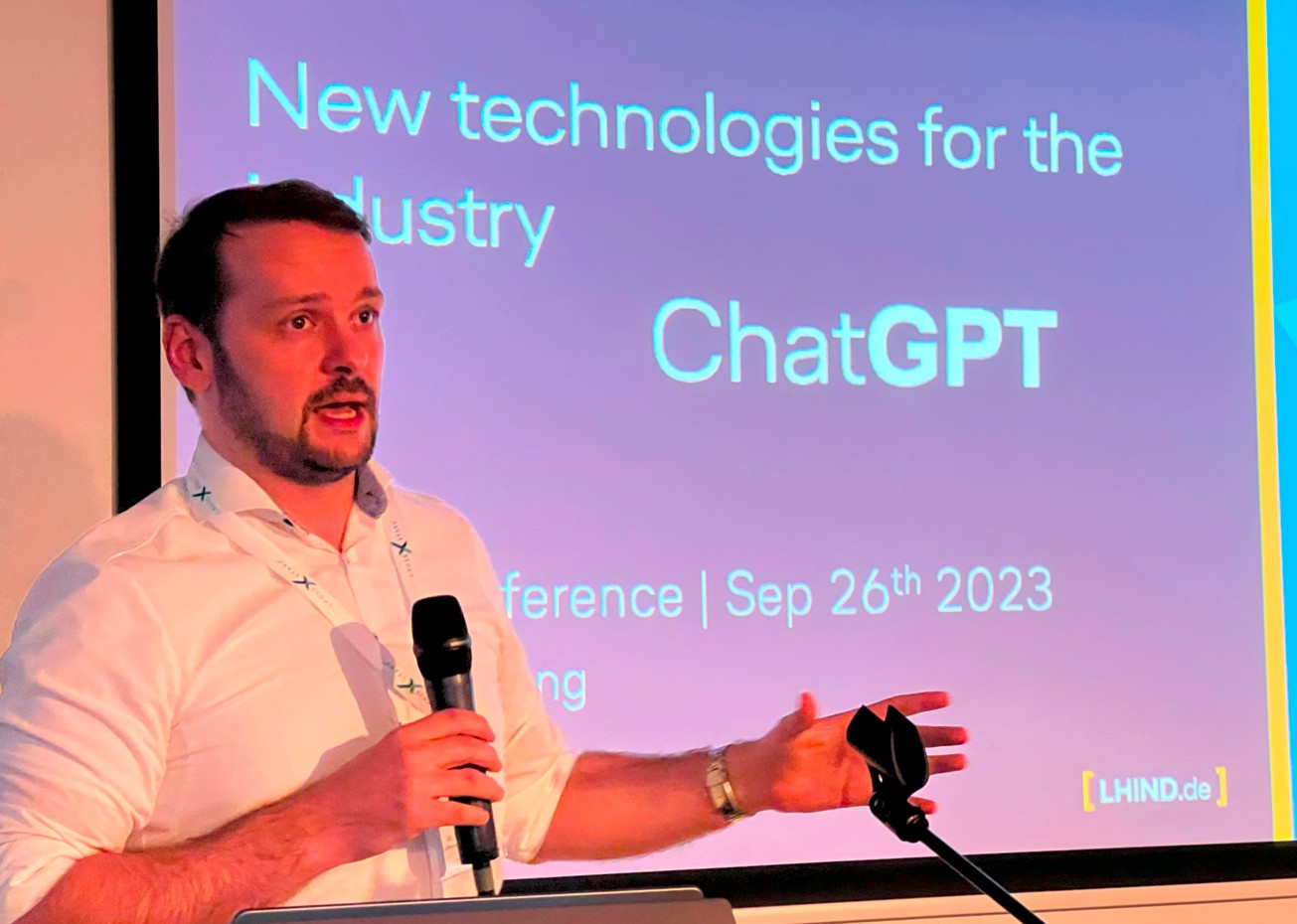
The world is changing – and so is the logistics and transport industry. The opportunities and perspectives, as well as the dangers and risks arising from these changes, were the focus of this year’s BCO Conference, held at the invitation of XSTAFF GmbH on September 26, 2023, in Antwerp.
Just like the industry, the BCO Conference has also visibly transformed in recent years. What began as a management meeting in the fall of 2018 in Düsseldorf has evolved into a high-profile event that this year attracted not only renowned speakers but also around 100 participants from Europe and Asia. A newly organized in-house exhibition, where members and network partners showcased their offerings, provided another welcome opportunity for networking and idea exchange.
Overcoming challenges with innovation
Whether it’s the effects of demographic change, the consequences of climate change, or changes triggered by digital transformation – like many other sectors, the logistics industry faces significant challenges. A situation that, according to Dr. Martin Schwemmer, Managing Director of the Bundesvereinigung für Logistik e.V. (BVL), is not surprising. “It has long been known that such scenarios could arise. However, we thought that global supply chains would be more resilient. In recent years, we have been proven wrong.” Nevertheless, he sees good opportunities in addressing these global crises. “The megatrends of our time have one thing in common: an innovative, technological component. This is where we can and should start.” In the German market alone, with a volume of 319 billion and an eight percent share of the gross domestic product, one of the most important logistics markets worldwide, there are currently numerous approaches to more firmly anchor sustainability in logistics. The focus is on the areas of software development, infrastructure, data management, and network design. “Innovative solutions, especially for the B2B segment, are mostly being developed by start-ups. Their concepts demonstrate what happens when technology and innovation go hand in hand. Only in this way can we succeed in making global value chains more digital, sustainable, and resilient.”
Artificial intelligence on the rise
Among other things, the topic of artificial intelligence (AI) is expected to help. For Dr. Max Pillong, Business Director at Lufthansa Industry Solutions, it is an important future topic that offers much potential: “With Chat GPT, there is already a very good offering that we have further developed for our business with the Smart Assistant.” XSTAFF is also now relying on this innovative technology. They are developing their own AI solution that adapts the advantages of the new technology to the needs of shipping companies. For project manager Christian Boekhoff, this is a promising approach that provides significant added value to customers: “Whether it’s capacity and route planning, managing cargo and transport solutions, or error analysis: artificial intelligence can be utilized along the entire supply chain for the benefit of all parties involved.” Since the beginning of 2023, a pilot project has been underway, for which data from 12,000 shipments and around 130,000 estimates regarding arrival times have been collected, analyzed, and processed. The system is still in the testing phase, with a rollout planned for 2024.
More and more players are focusing on sustainable solutions
Innovative developments are bringing further dynamism to a market that is already facing massive changes, says Jan Tiedemann, Senior Analyst at Alphaliner: “What will happen in the market in 2024 is difficult to predict. Most shipping companies are still making good profits. However, it is already apparent that the era of large alliances is coming to an end. By 2025, some of the top ten shipping companies will certainly slip into the loss zone.” Nevertheless, the expansion of transport capacities in a highly consolidated market will continue, also due to the necessity of equipping ships with sustainable technologies. “The green transformation of fleets is underway, both in terms of the design and equipment of ships and regarding fuels. By 2024, around half of all ships entering the market will be powered by alternative fuels such as LNG, methanol, and ammonia.”
But other players are also increasingly aligning their activities along the supply chain with sustainability criteria, including the Port of Antwerp/Bruges. The second-largest port in Europe, with a throughput of 287 million tons annually, aims to provide customers with a wide range of alternative fuels in the future and contribute to significantly reducing CO2 emissions in international shipping. The offerings include the procurement of fuels (LNG, methanol, ammonia, etc.) and their provision through a modern bunkering system, support for last-mile deliveries, and the promotion of alternatives. “By 2025, we want to implement the so-called ‘Green Shipping Corridor,’ and I believe we are on the right track,” says Jan Cuyt, Business Development Advisor at the Port of Antwerp/Bruges.
The Belgian Colruyt Group, along with COOP Swiss and the Spanish fashion companies Mango and Tendam, founders of XSTAFF GmbH, is similarly satisfied.
Since 2005, Colruyt has been working on electrifying its vehicle fleet. “It has always been important for us to contribute our own ideas and concepts and to work together with manufacturers to develop solutions. When that didn’t work, we even built a hybrid vehicle ourselves,” recalls Peter Leonard with a smile as he reflects on the beginnings. The goal is clearly defined: by 2035, the CO2 emissions of the entire vehicle fleet of the group should be reduced to zero. An ambitious undertaking, but one that points in the right direction, says Dr. Günther Bachmann, sustainability expert and consultant: “We cannot just talk about sustainability; we must also act. Sustainability is today, not tomorrow or the day after. By then, it might already be too late.” For the former Secretary General of the German Sustainability Council, it is about more than just individual measures: “We need a paradigm shift. The old saying ‘First business, then the environment’ simply no longer works. Today, the business of business is the transformation of business – and sustainability must come first.”
China remains the great unknown
Innovative AI solutions, the conversion of shipping fleets, or measures in infrastructure – the BCO Conference has shown how committed the industry is to working on new and innovative solutions. Regardless, logistics remains dependent on major geopolitical developments, which are significantly determined by the situation in China. A situation that Felix Lee, journalist and excellent connoisseur of the Chinese market, considers stable despite declining economic data from the Middle Kingdom. “The speed at which Chinese companies implement processes and develop products is still significantly higher than in most European countries. In many areas, China has reached a level that Europe will not be able to match.” For example, about 85 percent of solar systems worldwide are currently “Made in China,” and in the area of e-mobility, the country is now the number one globally. To sustainably change the current status quo in relations with China, a paradigm shift is necessary from his perspective: “We should view China less as a systemic adversary and more as a competitor. On this level, we can reach an understanding, while the current discussion about values and ideals will remain fruitless.”
2024 in Hamburg
At the end of a varied day of events, Stephan Schiller and Antonios Rigalos, both Managing Partners of XSTAFF, provided an overwhelmingly positive summary: “We heard highly interesting presentations and experienced exciting discussions that highlighted how much potential exists in this industry, but also how great the challenges are that we still have to overcome,” summarized Stephan Schiller the results of the event, which, according to Antonios Rigalos, also had much to offer regarding team building and networking: “With the premiere of the Marketplace, we have created a place that offers excellent opportunities for dialogue and idea exchange for all stakeholders. We will certainly offer this option again in 2024 in Hamburg, where the next BCO Conference will take place.”
Photo: © XStaff