

Update from December 8, 2025
(Bern) In the EWLV, individual freight wagons are collected from different customers and assembled into freight trains. The Confederation is awarding SBB Cargo Switzerland the performance mandate for single wagonload transport (EWLV) for the years 2026 to 2029. Following the conclusion of SBB’s contracts with EWLV customers communicated at the end of November (SBB News “Freight transport customers rely on transport with SBB in the long term”), the service agreement is the next milestone in the realignment of EWLV. It enables customers and SBB to plan their transports and is the basis for the new production model for the EWLV.
“This means that SBB will continue to offer the Swiss economy a nationwide range of climate-friendly rail services in the future,” says Alexander Muhm, member of the SBB Group Executive Board and Head of Freight Transport. Without the EWLV, up to one million additional truck journeys would be necessary annually on the heavily congested Swiss motorways.
Single wagonload transport from a single source
SBB Cargo Switzerland was the only railway company to submit a bid and will continue to ensure the EWLV within Switzerland from a single source. In doing so, it works regionally with other railway companies. Cooperation takes place where it makes economic sense and increases the competitiveness of the EWLV compared to the roads.
The service agreement is based on the revised Freight Transport Act (GüTG), with which parliament decided in spring 2025 to fund the EWLV for a limited period of eight years. CHF 260 million is available for the first four years. The promotion of transport services cushions the price increases for customers. In addition, the Confederation supports SBB’s investments in the automation and digitalisation of the EWLV in order to ensure its future viability.
Federal government calls for self-economic EWLV
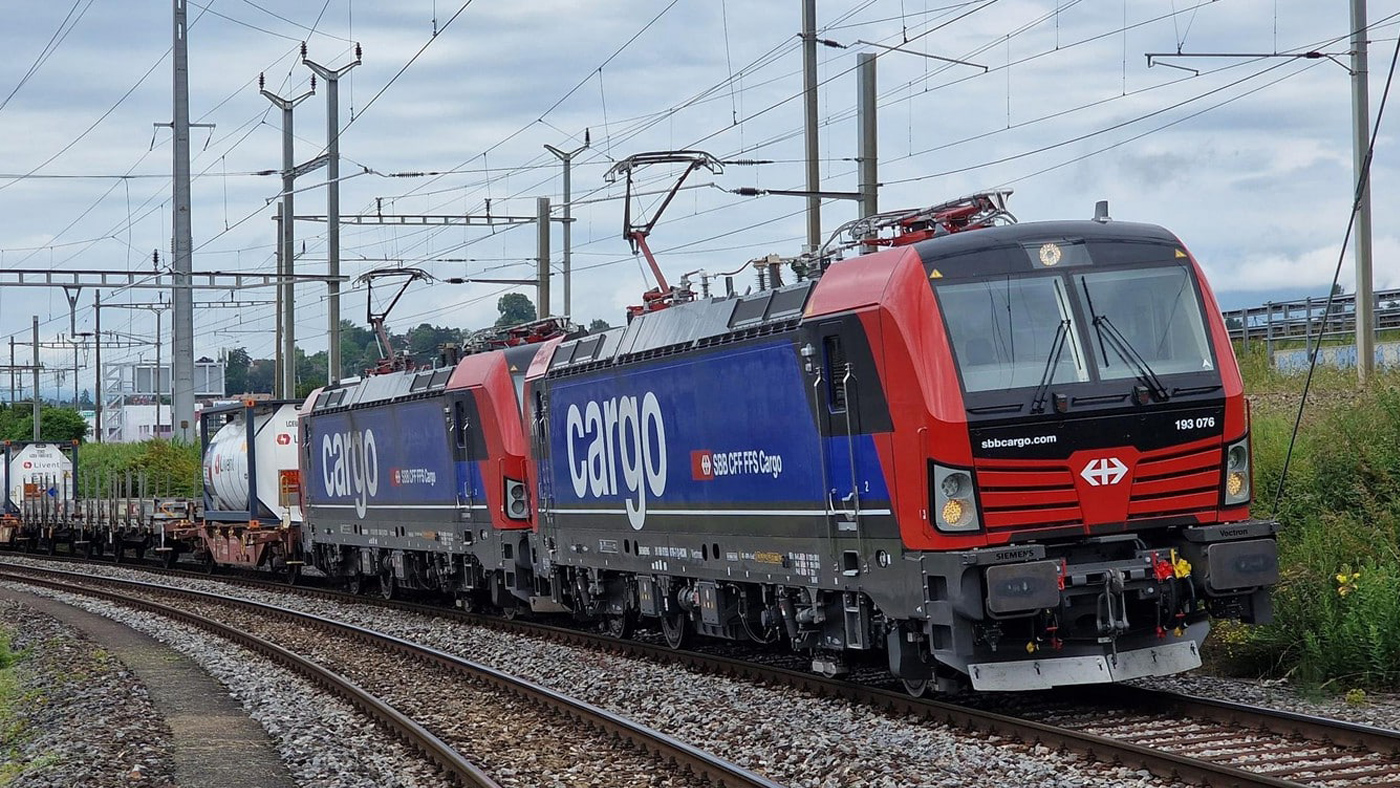
Currently, the EWLV is heavily loss-making: In 2024, SBB Cargo Switzerland recorded a loss of –81 million francs with this transport service. In the future, the EWLV must be operated on a self-economic basis, as demanded by the federal government as the owner of SBB. Everyone is making their contribution: the federal government with temporary financial support for single wagonload transport, customers with cost-covering prices and SBB itself, which is increasing efficiency and reducing costs. To this end, SBB is investing in modern locomotives and standardised freight wagons, focusing more on automation and working with customers to develop a new production model.
Realignment thanks to new production model
The latter will enable simpler, more efficient, more robust and more economical operation in the EWLV from the 2026/27 timetable change (13 December 2026). The goal is to run as many long, fast connections as possible through Switzerland. Based on the customer contracts and the expected transport volumes, the new transport network is planned. Service points with insufficient demand will no longer be offered in the EWLV network of SBB Cargo Switzerland in the future, but will remain accessible to all railway companies as public infrastructure facilities. Nevertheless, on the basis of current volumes, around 98 percent of the wagons can still be transported.
The new production model in the EWLV and the adapted transport network are changing the need for personnel and locomotives. Accordingly, there will be postponements, because SBB has to deploy employees where there are goods to transport. As already communicated, jobs that are no longer needed will be cut in a socially responsible manner. SBB has a collective employment agreement (CLA) and will comply with it at all times. SBB will be able to provide concrete information on this in spring 2026.
 The information events currently underway for employees relate to the realignment of single wagonload transport, not to the realignment of combined transport. With regard to combined transport, a solution has already been found for two-thirds of the approximately 40 employees affected in Ticino, and for the remaining employees, the search for a solution will continue until the end of October 2025. Further information can be found in the