


“EU Delivery Act” reforms delivery market
Feb 19, 2026 at 9:03 AM
SBB Cargo plans fleet renewal by 2040
Feb 23, 2026 at 9:29 AM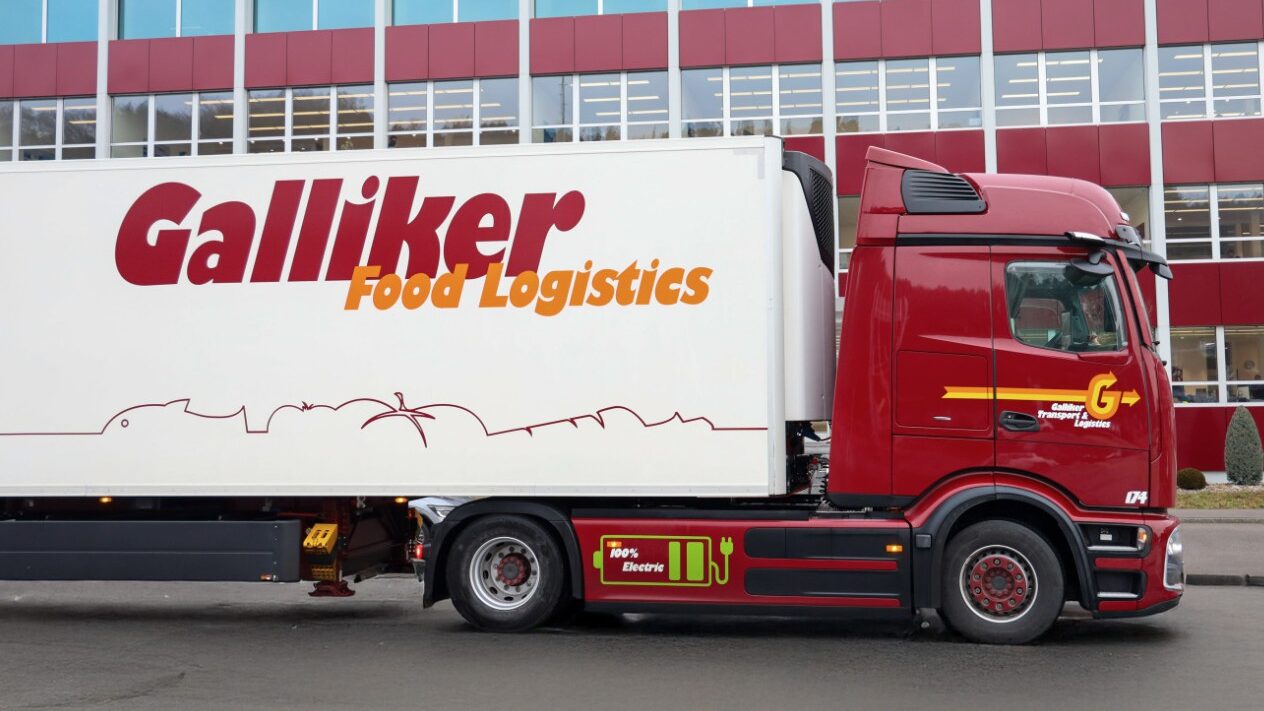
The Galliker Transport AG has taken another step towards emission-free transport solutions. By connecting three electric trucks to electrically operated refrigeration units on the trailers, a new solution has been developed that paves the way for CO₂-neutral refrigerated vehicles.
For the first time, a modification has been made to the installed refrigeration units from Carrier, allowing them to be operated directly via the high-voltage battery of electric tractors. The power supply is provided by a 400V voltage converter that draws electricity directly from the high-voltage battery of the electric truck. This innovation results in the refrigeration units being operated entirely electrically, eliminating the need for fossil fuels.
Technological Advancement
A key feature of this solution is the intelligent use of existing technologies. The diesel refrigeration units from Carrier are equipped with an integrated electric motor, which is now used for operation via the high-voltage system of the tractor. This conversion not only increases efficiency but also allows proven components to be sensibly reused and adapted to the requirements of electromobility.
The pilot project builds on the Swiss premiere of 2021, when the first refrigerated trailer with a fully electrically operated refrigeration unit was put into operation in Switzerland. This eCool system utilized an axle generator that converted kinetic energy into electricity. A battery pack stored the generated electricity and supplied the refrigeration unit independently of the truck. The advantage of this solution was that the refrigeration system could also be operated while the trailer was stationary, without generating CO₂ emissions and without affecting the operation of the tractor. To date, 27 refrigerated trailers with this technology are already in daily use.
With the new approach, Galliker is testing another practical technology aimed at further developing existing components and advancing the electrification of the transport chain.