




German customs halts illegal waste transports
Mar 17, 2026 at 2:11 PM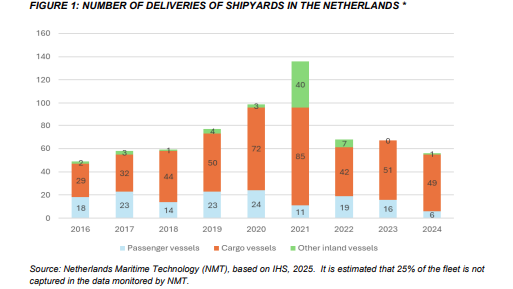
The European shipbuilding industry for inland navigation faces a multitude of challenges and opportunities, as highlighted in a recent report by the Central Commission for the Navigation of the Rhine (CCNR). The report provides a comprehensive overview of the current state of the industry, the key players and the trends that will shape the future of shipbuilding in inland navigation.
Market Analysis and Capacities
In Europe, around 200 shipyards are active in inland navigation, with most located in the Netherlands and Germany. Annually, between 100 and 150 new inland vessels enter the market, with the capacity utilisation of the shipyards being nearly full in recent years. Shipyards in Western Europe are primarily specialized in final outfitting, while hull construction is often outsourced to subcontractors in countries such as Romania, Serbia, and China. This international division of labor is crucial for the competitiveness of European shipyards.
The demand for new vessels has increased in recent years, particularly in the area of river cruise ships, which are recovering from the impacts of the COVID-19 pandemic. At the same time, there is a trend towards larger vessels, especially in the tanker market, which raises the requirements for the shipyards.
Industry Challenges
Despite the positive market development, the industry faces several challenges. These include a shortage of skilled labor, dependence on non-European countries for hull construction, and long construction times caused by bottlenecks with subcontractors and inspection authorities. These factors limit the flexibility of the shipyards and can lead to delivery delays.
Another issue is the need to adapt to changing environmental regulations. The industry is under pressure to develop and implement more environmentally friendly technologies, which requires additional investments. The transition to alternative fuels and the development of vessels suitable for low water levels are examples of necessary adjustments.
Opportunities and Future Outlook
Despite these challenges, there are also promising opportunities. The energy transition and the development of new markets, particularly in urban logistics and the circular economy, could stimulate innovations and investments. The increasing demand for vessels suitable for low water levels could also create new business opportunities for the shipyards.
The CCNR recommends supporting the European shipbuilding industry through targeted political measures. This includes financial assistance for the industry, the promotion of training programs to combat the shortage of skilled workers, and ensuring European expertise in shipbuilding. Greater coordination among the shipyards could also help improve efficiency and better address the challenges.
Overall, the report indicates that the European inland shipbuilding industry is at a turning point, where both challenges and opportunities exist that must be leveraged to secure the competitiveness and sustainability of the industry.