


Bertschi Reduces Electricity Consumption at Birrfeld Terminal by 40%
Dec 20, 2022 at 5:05 PM
FIEGE Renovates Logistics Center at Swiss Location Bülach
Jan 21, 2023 at 1:10 PM
After two years of COVID measures, the beginning of this year brought great hope for a 2022 characterized by a return to normality. However, things turned out differently. While Europe showed signs of easing regarding COVID, China strictly enforced its measures. Consequently, supply chains remained tense. Then in February came the shock: war in Ukraine, leading to energy shortages and rising energy costs, and the onset of inflation. By the end of the year, however, despite all adversities, the overall tone is conciliatory and cautiously optimistic.
(Basel) How many “blue eyes” can an economy withstand? Is this being overstretched and will it eventually come back as a boomerang, perhaps as early as 2023?
Just as the effects of the COVID measures were somewhat overcome at the beginning of this year, Russia’s war against Ukraine began. The result was that energy became scarce and, above all, expensive. But that was not all; while COVID suddenly became a secondary issue in Europe, China remained steadfast. The zero-COVID strategy was maintained, and as a result, supply chains continued to be under pressure.
Only now, towards the end of the year, after even strict China has seen resistance to the excessive measures, has the local government finally been willing to ease restrictions. This will soon have an impact on supply chains as well. The alarming reports of a massive increase in cases since the easing of measures will hardly influence this, as locals are gradually learning how to interpret the reports.
Great Fear in Spring
In light of high energy prices, logistics providers and large parts of the energy-intensive industry were gripped by fear. Existential threats were outlined everywhere, and hardly any industry association failed to demand state aid.
Prices remain high for all forms of energy, such as gas, oil, electricity, and water. However, the calls for rescue have largely fallen silent. Large parts of the economy have realized that price increases cannot be borne solely by logistics providers and transport companies.
Therefore, the anticipated mass failures among transport companies have not occurred, even though the situation remains very tense.
Relaxation in Sea and Air Freight
In sea freight, which suffered the most during the COVID measures, signs of relaxation are already evident. There are fears that prices may fall back to pre-2019 levels, leading to a buildup of overcapacity. This is particularly unfortunate for shipping companies.
These companies have profited significantly from the COVID measures in China and will once again struggle for survival. Of course, they can live off the surpluses from the two “golden” years for a while longer, but in the long term, there is certainly a risk that market consolidation through acquisitions, mergers, or even bankruptcies will occur. This is also partly due to customer behavior. After all, who voluntarily pays more than what the market offers? There is also the danger that only a few remaining shipping companies will form a monopoly.
Initially, however, capacities in the form of environmentally unsuitable ships can be reduced. These have been in service longer than planned to somewhat meet customer demands. This presents a significant opportunity for a climate turnaround in shipping. With less traffic, it is also easier to use environmentally friendly fuels.
 In air freight, the boom has long since cooled down. The days when passenger planes were quickly converted into cargo planes are over. Volumes are declining month by month.
However, this is a complaint at a high level, as the volumes of 2020 and 2021 were abnormal, not the current declines, which merely return to pre-pandemic normal levels. Making predictions for the coming years is difficult. If volumes in sea freight decline and thus prices fall, this will also impact air freight. If the economy indeed attempts to reduce its dependence on China (and other distant destinations), this will also affect air freight.
Stable Transport Situation in Europe
Despite the very close war situation in Ukraine, there has been no collapse of road transport. Times have become tougher, but the transport industry has proven to be stable. Although the lucrative COVID times are over, the economy has surprisingly managed to maintain a high order volume.
Nevertheless, road transporters continue to face significant challenges. The transition to sustainable vehicles poses enormous efforts, especially for small companies, primarily in financial terms. Additionally, the shortage of drivers has worsened rather than eased. Many drivers from Ukraine have been conscripted.
Moreover, it is still unclear where the journey is headed. Should the focus be on battery-electric vehicles, CNG/LNG, or even hydrogen? Is the good old diesel really at its end? Or will it turn out that electric solutions are not the ultimate answer from an environmental perspective? Can enough (clean) electricity be produced when all transport (passenger and freight) is converted? The required amounts are enormous. It seems possible, but it also appears risky to rely so vehemently on just one path.
Opportunity for Combined Transport
On long distances, there is an increasing call to focus on combined transport. This option has existed since the 1980s. Where it works, it has been utilized since then. The offering has expanded according to the available routes, but not nearly enough to transport goods on a large scale by rail. This is unlikely to change quickly, even though the opening of the new Gotthard tunnel has at least improved transit through the Alps to and from Milan. The continuous height clearance through Swiss tunnels has simplified many things. However, there is still significant room for improvement in the broader area.

With the digitization of booking processes, efforts are being made to optimize operations and at least better utilize existing offerings. All stakeholders, from freight forwarders to operators, railways, terminals, ports, etc., should be better connected through platforms to become more transparent and efficient, thereby avoiding unnecessary empty spaces on the offered trains.
Demand for Logistics Real Estate and Intralogistics Remains High
The demand for logistics real estate and intralogistics has remained at a constant level. In many cases, this involves the execution of long-term planned facilities. However, new projects also remain consistent.
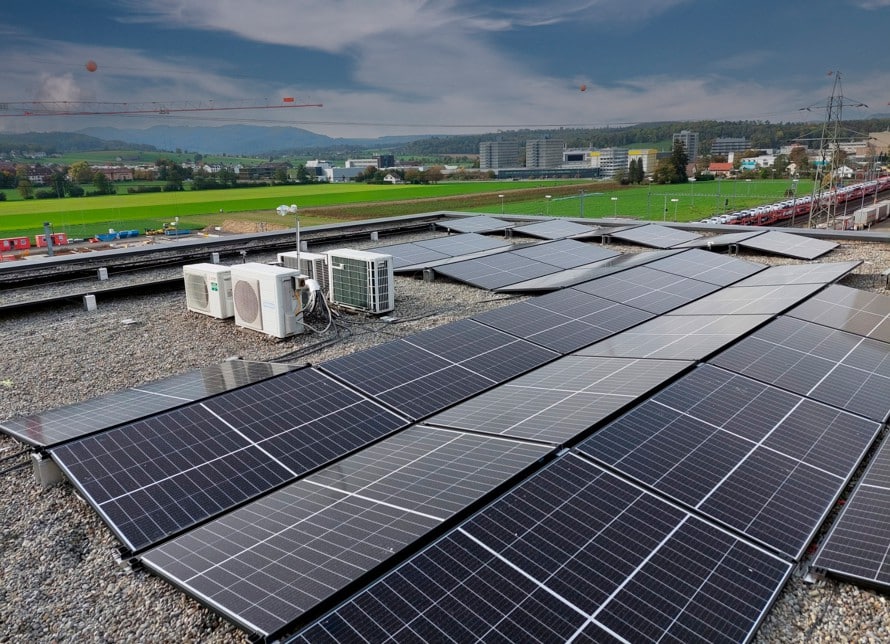
Logistics real estate offers a significant opportunity for sustainability, as their large roof areas are ideal for the installation of solar panels without affecting the urban or local landscape. Many logistics facilities now generate their entire energy needs independently, and occasionally even produce surplus energy.
However, municipalities in many areas have not understood what logistics means. According to a study by Garbe and JLL, in North Rhine-Westphalia alone, since 2012, applications for 9.3 million square meters of logistics space have been negatively decided by the respective cities or municipalities. Whether COVID has initiated a change in thinking remains to be seen.
The KEP Sector Must Come to Terms with Business as Usual Again
The gold rush atmosphere in the KEP sector is over. COVID measures drove people to online shopping. Now they are going out again and increasingly shopping in person. However, this is a complaint at a high level.
On the so-called “last mile,” a large number of start-ups are still trying to optimize the transport of packages and parcel shipments in the city with ever-new ideas. Bundling is the keyword, under the motto: “Better 10 cargo bikes than one delivery van.” Millions in investment capital are being poured into this sector, especially into the associated digital platforms. But the question remains how to make an additional profit on a package that costs an average of 5 EURO to transport from A to B on the last mile. Software or not, the customer wants the package at their doorstep or to pick it up at a parcel station.
Such parcel stations are currently emerging everywhere. DB and Deutsche Post DHL recently opened their parcel stations at train stations to competitors. Click & Collect also has room for growth. In the end, it will likely be a mix.

Models involving food deliveries, such as Uber Eats or Eat.de (Eat.ch), etc., are also questionable. Currently, Gorillas is consuming one competitor after another. But can it be promising in the long run to have a lukewarm burger with soggy fries worth about 12 EURO delivered to your home?
The situation is different for suppliers like Picnic, which deliver weekly groceries to homes and also optimize routes cost-effectively. The competitor Flaschenpost is now moving in this direction as well. Here, home delivery can make sense and complement the existing retail offering.
Key Market China
China remains the largest supply market. It is also the largest growth and consumer market for productions from Europe or the USA. This is far too often overlooked.
While it is currently being loudly demanded to become independent from China in sourcing, this should be done if possible. However, becoming independent from the Chinese market will remain an illusion. After all, who else will ensure significant growth rates if not China? Therefore, it makes no sense to completely bring sourcing back to Europe only to supply China and the Far East from here.
 Container terminal in Shanghai
Conversely, China has long extended its feelers towards the USA and Europe. This was recently evident in the takeover by the Chinese (state-owned) shipping company COSCO of the Toller Ort container terminal in Hamburg. At the last moment, a 35% stake was reduced to 24.9%. This effectively circumvented the blocking minority. However, China already holds stakes of various sizes in several other European ports.
Dealing with China will remain a challenge. Both pandering and constant lecturing are equally wrong. An economic dialogue at eye level must take place with China. Until now, China has been almost worshipped due to its high economic growth rates, including the blind adoption of COVID measures. Suddenly, however, there are condescending tones, and there is a desire to educate China. Both approaches are incorrect. This country is simply too large for that. Unless one completely renounces relations with China, which would also be the wrong path.
Outlook for 2023
What can be expected from a logistical perspective in the new year? Honestly, a year without anything would already be a worthwhile goal. Simply handling day-to-day business, addressing digital trends, or taking further steps towards sustainability would be sufficient after these three hectic years.
However, the war in Ukraine continues. The outcome is uncertain and could turn in any direction. Gas and oil will remain critical commodities. Electricity, especially green electricity, will also not be in abundance. The shutdown of nuclear power plants could become a significant challenge, especially in Germany. However, nuclear power can be imported from abroad if necessary, and the good old coal is making a comeback, stronger than ever!
Despite everything, it seems that 2023 could bring a sense of calm in this country, including for logistics. In May, the industry’s leading trade fair, “transport logistic,” will take place after it was canceled in 2021 due to COVID measures. The big reunion will surely provide new impulses for the industry.
Photos: © Loginfo24 (Title image © Pixabay)