


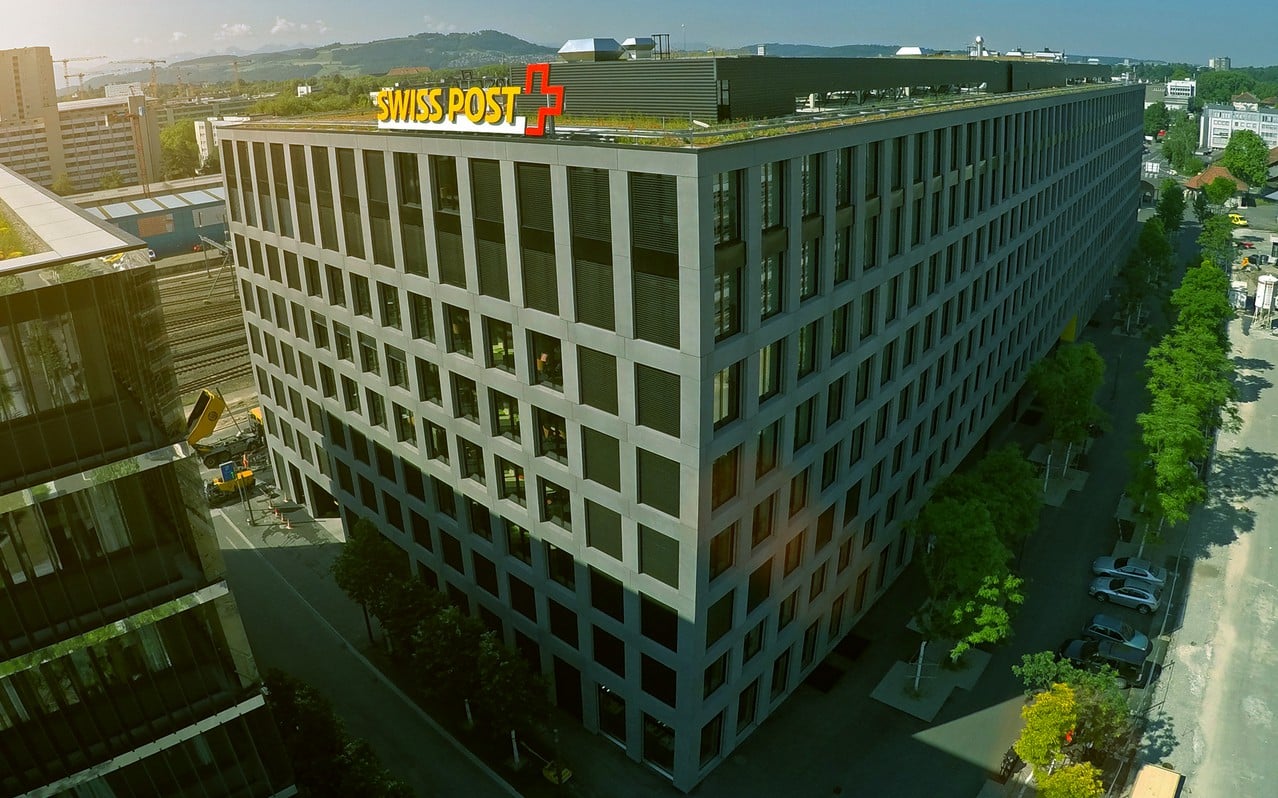
Swiss Post Named Best Post in the World for the Sixth Consecutive Time
Oct 9, 2022 at 7:32 PM
Hellmann Expands in Switzerland and Acquires ATS-Hellmann
Oct 10, 2022 at 4:01 PM
The consortium quantifies the shortage of drivers at 56,000 in 2022. Results from the business survey highlight the main causes. A model for quantifying the effects promises insights into the corporate and economic damage. The study is conducted by Logistics Advisory Experts, the Technical University of Dresden, and the Institute for Applied Logistics Würzburg-Schweinfurt FHWS.
(Arbon/Dresden/Würzburg-Schweinfurt) Due to the lack of reliable figures regarding the current situation of capacity bottlenecks, particularly in driver personnel, the consortium study was launched in February 2022 under the leadership of Professors Wolfgang Stölzle from Logistics Advisory Experts (a spin-off from the University of St. Gallen), Thorsten Schmidt from the Technical University of Dresden, and Christian Kille from the Institute for Applied Logistics at the University of Applied Sciences Würzburg-Schweinfurt FHWS. The goals of this consortium study are to collect concrete figures and their future development, identify causes and effects of the bottlenecks, and compile suitable countermeasures. It is already clear: Without timely and appropriate countermeasures, bottlenecks in the transport market can lead to supply shortages for industry and trade – with far-reaching negative impacts on Germany’s economic location. The high significance of the topic is also underscored by the composition of the consortium: 16 companies, 5 associations, and an operator of a digital platform.
Final quantification of the driver shortage
The seemingly simple determination of the need for drivers in freight transport reveals the intricacies of the details, given the range of reported values: In the tension between warning voices and expected needs of up to 80,000 skilled workers on one hand, and sober analyses that recognize only a gap of a few thousand drivers on the other, the consortium aimed to generate robust figures and comprehensible statements regarding the shortage of drivers. In summary, the team of professors Stölzle, Schmidt, and Kille estimates the capacity bottleneck in the transport sector at 56,000 professional drivers in 2022. This determination is based on a specially developed calculation model. This model primarily relies on official figures from the Federal Employment Agency (BA) and integrates a method proposed by the Institute of the German Economy (IW) to correct the reported data to account for distorting effects from, among other things, temporary employment agencies.
Calculation model provides valid figures
Thus, the calculation model initially provides valid figures and quantifies the gap at approximately 10,000 skilled workers. Subsequently, the findings from an extensive analysis of various secondary sources served as the basis for expanding the model, allowing for the generation of not only valid but also representative figures that reflect real market conditions. It became evident that correction factors must be applied to compensate for effects such as the absence of trained drivers from the military, the non-consideration of a sub-market of the transport sector in the BA data (e.g., self-employed individuals), or the non-placement of a specific group of registered unemployed individuals.
At the same time, it is clear that there is a controversy regarding the reporting rate of open driver positions to the BA, particularly because the reporting rate has a significant impact on quantifying the skilled labor gap. The BA itself estimates that it receives reports for about 50% of the actual skilled positions sought. Other sources report rates ranging from 25% to over 60%. This wide range prompted the derivation of the actual reporting rate from the responses of a broad-based survey: On average, the surveyed participants indicated that they report about 36% of their open positions to the Federal Employment Agency. This figure seems plausible in light of numerous discussions with and among the consortium partners, but it obscures the fact that there is an extremely heterogeneous survey result in detail. Specifically, about 40% of all companies are not in contact with the BA at all, while about a quarter of the survey participants report 100% of their open positions – regardless of the intended deployment radius of the personnel. The reporting rate of larger companies tends to be lower than that of smaller and medium-sized enterprises.
First, a precise picture of the skilled labor shortage
It can thus be concluded that the developed calculation model for quantifying the driver shortage, along with its assumptions and the correction factors applied – particularly the reporting rate – creates a precise picture of the skilled labor shortage for the first time. It calculates an immediate gap of 10,000 missing skilled workers from the data of the Federal Employment Agency, while correction factors reveal an additional shortage of 26,000 individuals. Due to demographic change, an annual deficit of nearly 20,000 skilled workers arises, as significantly more professional drivers retire than new ones enter the profession.
With a total of approximately 56,000 missing skilled workers in 2022, the transport sector even exceeds the levels of the top shortage professions in nursing and childcare (skilled labor gap of approximately 35,000 and 20,000, respectively). In relation to the total number of socially insured employees, the significance of the driver shortage becomes apparent: The approximately 565,000 socially insured drivers are matched by more than 800,000 socially insured employees in nursing and childcare! For this reason, it is necessary to continue the quantification based on the current snapshot. Another finding of the consortium study is the need to continuously verify the survey results. The observed heterogeneous response behavior suggests fluctuations in future incoming data. The aim is therefore to capture the dynamics of change and update the forecasts regarding the shortage of drivers.
Results of the business survey on the causes
Members of the involved professional associations BGL, BWVL, DSLV, as well as HDE and BVL were surveyed over the summer regarding the causes of the bottleneck. From nearly 200 responses, a clear picture emerges:
- Long, unattractive, and poorly predictable working hours
- coupled with non-competitive salary prospects,
- lack of societal appreciation and therefore an unattractive image of the profession, as well as
- insufficient new talent due to demographic change and the suspension of military service
are by far the most important of the 40 identified causes for the shortage of drivers from the perspective of transport companies. The prioritizations differ only slightly by company size. Only in small and medium-sized enterprises does the lack of new talent weigh more heavily than in larger companies. Consequently, measures must be found to resolve the bottleneck that either make the profession more attractive (attract more drivers) or improve process efficiency or effectiveness (require fewer drivers).
Model development for quantifying the effects of the driver shortage
To identify and prioritize relevant measures, a model was developed to quantify the effects of the driver shortage, which allows for a structured estimation of the costs for companies and the economy, for example, of delayed transport. The effects are considered according to cost structures of local, regional, and long-distance trucking, as well as relevance for company size and industry. Of the currently over 30 identified effects, fifteen can be monetarily assessed:
Effects on transport companies:
- Additional transports
- Unstable schedule
- Increased use of the spot market
- Building time buffers in transport planning
- Limited availability for inquiries
- Lower quality
- Increasing share of employees residing abroad / share of foreign employees
- Rising investments in facilities for drivers, digitization, and automation
- Increasing costs for training and further education, employer branding, and corporate culture, as well as recruitment processes
- Higher wage costs
- Delayed transports
- Cancelled transports / incomplete transports
- Quality defects in transport execution
- Reduced flexibility in responding to customer requests
Effects on shippers:
- Building safety stocks
The other effects can currently be qualitatively assessed:
Effects on the side of transport companies:
- More demanding workforce
- Aging workforce
- Demonstrating the provision and securing of personnel in tenders
- Slower clearance of ports
- Fewer new transport capacities affecting the used market
- Reduced supply to the country due to lower delivery density and thus higher costs
- Growing number of bankruptcies / increasing consolidation in the service provider market
- Lower growth
- Decreasing margins
Effects on the shipper side:
- Declines in delivery service
- Barriers to e-commerce development
- Development of new locations in Eastern Europe
- Delays for production companies and in trade
- Uncertainty regarding arrival times
- Failures or production stoppages
- Necessary rescheduling in production and trade
- Supply shortages for products
The next steps:
In autumn 2022, the results of the study will first be discussed within the consortium and then presented to the public in early 2023. For the first time, well-founded figures, data, and facts regarding the shortage of drivers in Germany, its causes, and effects will be available – linked with measures to alleviate this shortage.
The final results will be published at the end of 2022.
Partial results continuously at:
https://logistik-digitalisierung.de/
The consortium partners:
Platinum:
- JITpay
- KRAVAG
- TIMOCOM
Gold:
- CTL Cargo Trans Logistik AG
- Fahrzeugwerk Bernard Krone GmbH & Co. KG
- Seifert Logistics GmbH
- Transco Süd Internationale Transporte GmbH
Silver:
- Barth Spedition GmbH
- BTK Befrachtungs- und Transportkontor GmbH
- Hans Geis GmbH + Co KG
- Geberit Logistik GmbH
- GROUP7 GmbH
- Güttler Logistik GmbH
- Ludwig Meyer GmbH & Co. KG
- Miele & Cie. KG
- REWE Markt GmbH
The study project is supported by the following intellectual partners:
- Federal Association of Freight Transport, Logistics, and Disposal (BGL) e. V.
- Federal Association of Forwarding and Logistics (DSLV)
- Federal Association of Economy, Transport, and Logistics (BWVL) e. V.
- Federal Association of Logistics (BVL) e. V.
- Trade Association Germany – HDE e. V.
and
- JOBMATCH.ME
Photo: © Loginfo24