


VAP Ensures Comprehensive Clarification of the Accident in Gotthard
Aug 17, 2023 at 3:27 PM
From Wednesday, 90 freight trains are set to pass through the Gotthard
Aug 19, 2023 at 6:35 PM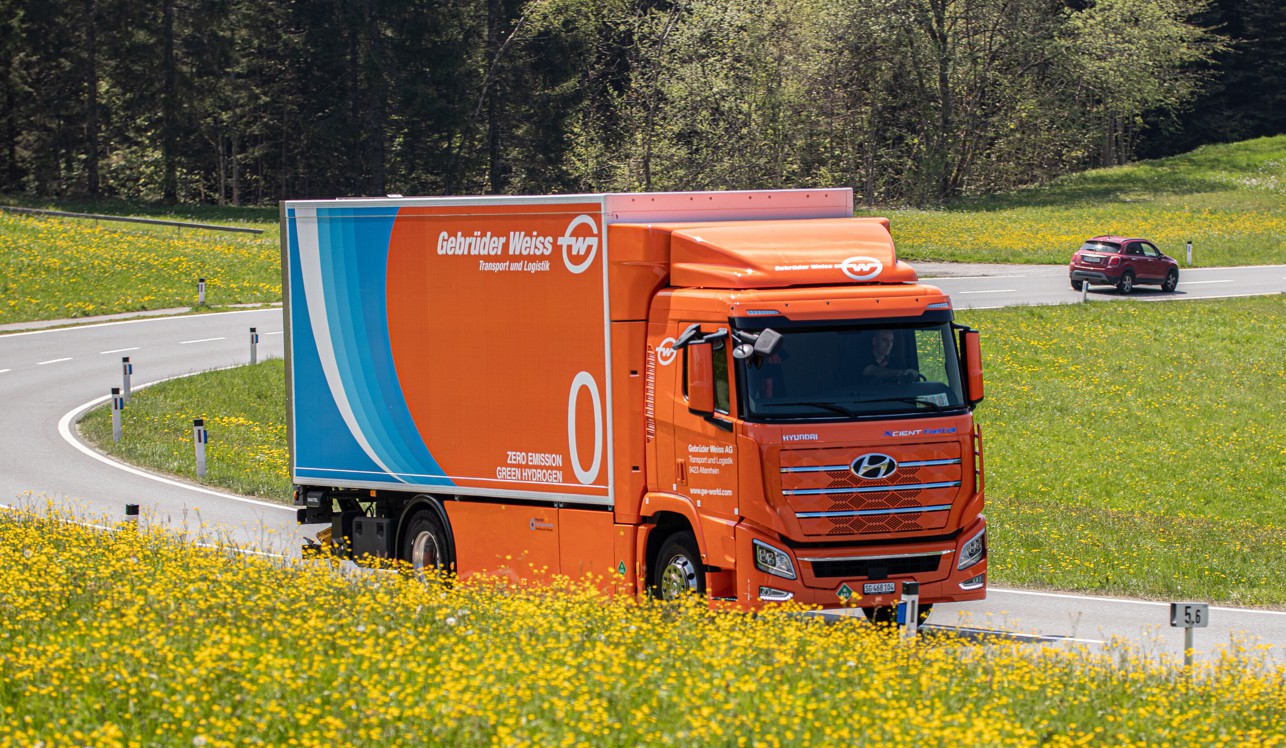
The coffee producer Atinkana strives to keep its ecological footprint as small as possible. The coffee beans are transported across the Atlantic to Europe by sailing ships. The last mile delivery is handled by Gebrüder Weiss with its hydrogen truck.
(Lauterach(Dübendorf) The coffee producer Atinkana pursues a sustainable vision: it aims to restore the original structure of the rainforest in Colombia in the long term and make the soil more fertile. Its project in the Colombian Sierra Nevada is financed by the Swiss company through the cultivation of coffee and cocoa as well as various fruits. These are grown in a natural cycle, and almost no emissions are produced through hand-picking and processing. For every kilo of coffee sold, Atinkana plants two trees in Colombia. To make the 8,500-kilometer transport to Europe as sustainable as possible, Atinkana relies on particularly environmentally friendly means of transport: the coffee beans are shipped across the Atlantic by sailing ship to Amsterdam, then transported by truck to Antwerp, and subsequently by rail to Basel. From there, they are delivered to the coffee roastery by Gebrüder Weiss with the hydrogen truck.
“Thanks to the collaboration with our innovative logistics partners Fairtransport and Gebrüder Weiss, we can cover 98 percent of the route from Colombia to Switzerland with sustainable means of transport. This makes our coffee in Europe almost as sustainable as a regional product,” says Andre Conte, responsible for logistics at Atinkana.

The transport from Colombia to Europe is carried out with sailing ships (© Atinkana)
The transport with two sailing ships to Europe takes about 10 weeks. Thus, 14 tons of coffee are transported to Switzerland once a year. In addition to reforesting the rainforest, Atinkana also sets high standards in other areas. For example, coffee farmers receive better wages than at other companies. Eight dollars remain in the country for every kilogram of coffee sold – five for the coffee beans, three for reforestation work. This corresponds to about 22 percent of the yield. The profit is primarily intended to benefit the Colombians.
The last mile is also emissions-free
Oskar Kramer, country manager Switzerland at Gebrüder Weiss, is enthusiastic about the project: “Atinkana’s environmentally friendly approach to production and logistics fits perfectly with Gebrüder Weiss. We have been investing in alternative drives for many years and aim to make transport as sustainable as possible. With the delivery of coffee using our hydrogen trucks, the last mile in Switzerland is also emissions-free.” Gebrüder Weiss has been successfully using its hydrogen truck (H2) in local transport in Switzerland for over two years. The company plans to deploy three more H2 trucks in Germany by 2024.
Photos: © Gebr. Weis/Schlaghuber