


Rheinmetall with new warehouse in Studen, Switzerland
Apr 20, 2026 at 9:35 AM
Birsterminal AG uses the Rhine as a key for heavy transport
Apr 20, 2026 at 5:15 PM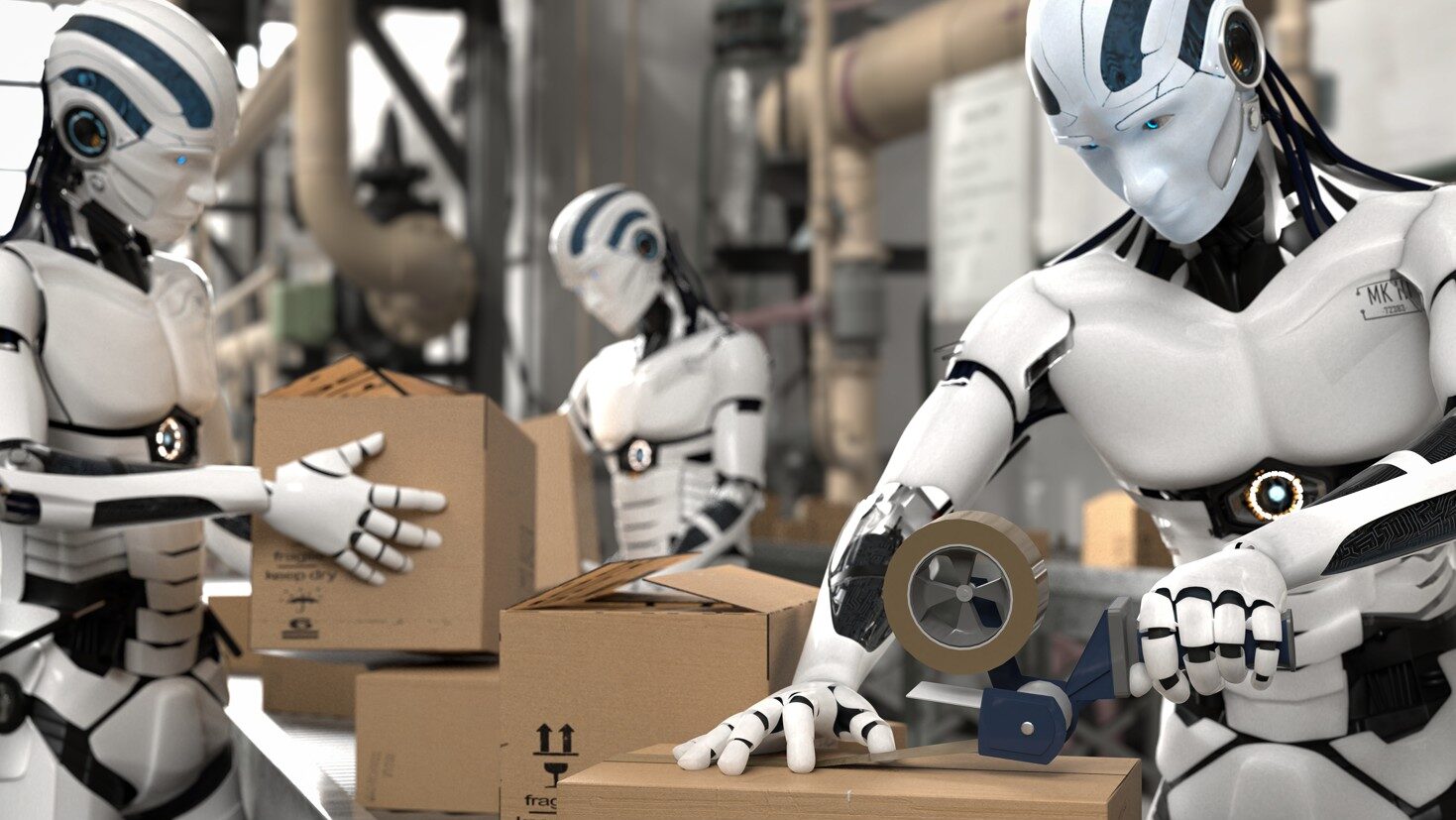
Humanoid robots are increasingly making their way into industrial manufacturing in Germany. According to a survey conducted by the digital association Bitkom during the Hannover Messe, 58 percent of the surveyed industrial companies see humanoid robots as a way to counteract the shortage of skilled workers. Additionally, 68 percent of companies believe that the use of these technologies can contribute to reducing workplace accidents. The survey refers to 555 industrial companies with at least 100 employees.
The Vice President of Bitkom, Dr. Tanja Rückert, emphasizes the challenges facing the German industry: „Geopolitical uncertainties, the economic situation, and demographic change are putting pressure on the German industry. Humanoid robots can be part of the solution: they can make companies more efficient and take on tasks where work is particularly dangerous and risky or where personnel is lacking.“
Currently, humanoid robots are not yet widely used in the German industry. Only 6 percent of companies are already using such technologies. Nevertheless, one in ten companies (10 percent) plans to integrate humanoid robots in the future, while 8 percent are discussing it. However, the majority of companies (97 percent) can envision using humanoid robots in production in the long term.
Despite the potential of this technology, there are still reservations among the workforce. 62 percent of companies report that their employees are skeptical about the use of humanoid robots. This skepticism may be related to concerns about job security. Dr. Rückert points out that the proper use of humanoid robots can increase productivity and secure the competitiveness of the industry. „For this to succeed, companies must involve their workforce early, take concerns seriously, and reduce apprehensions through targeted training and education,“ she explains.
Use of Humanoid Robots in Logistics
Humanoid robots show promising approaches to increasing efficiency in logistics. Companies like Amazon and DHL are already using humanoid robots to manage inventory and optimize the picking process. These robots can take on tasks such as lifting heavy loads or navigating complex warehouse environments, thereby relieving human employees.
The greatest potential lies in the automation of repetitive tasks and the improvement of workplace safety. In the future, humanoid robots could be used not only as support in picking but also in the last mile of delivery. The integration of AI and machine learning will enable them to adapt to different workflows and work more efficiently. In the long term, they could play a central role in logistics by increasing productivity and addressing the shortage of skilled workers.