


Swisslog expands its pallet shuttle system
Apr 22, 2026 at 12:40 PM
Felix Transport AG acquires Steiner Logistic AG
Apr 23, 2026 at 9:33 AM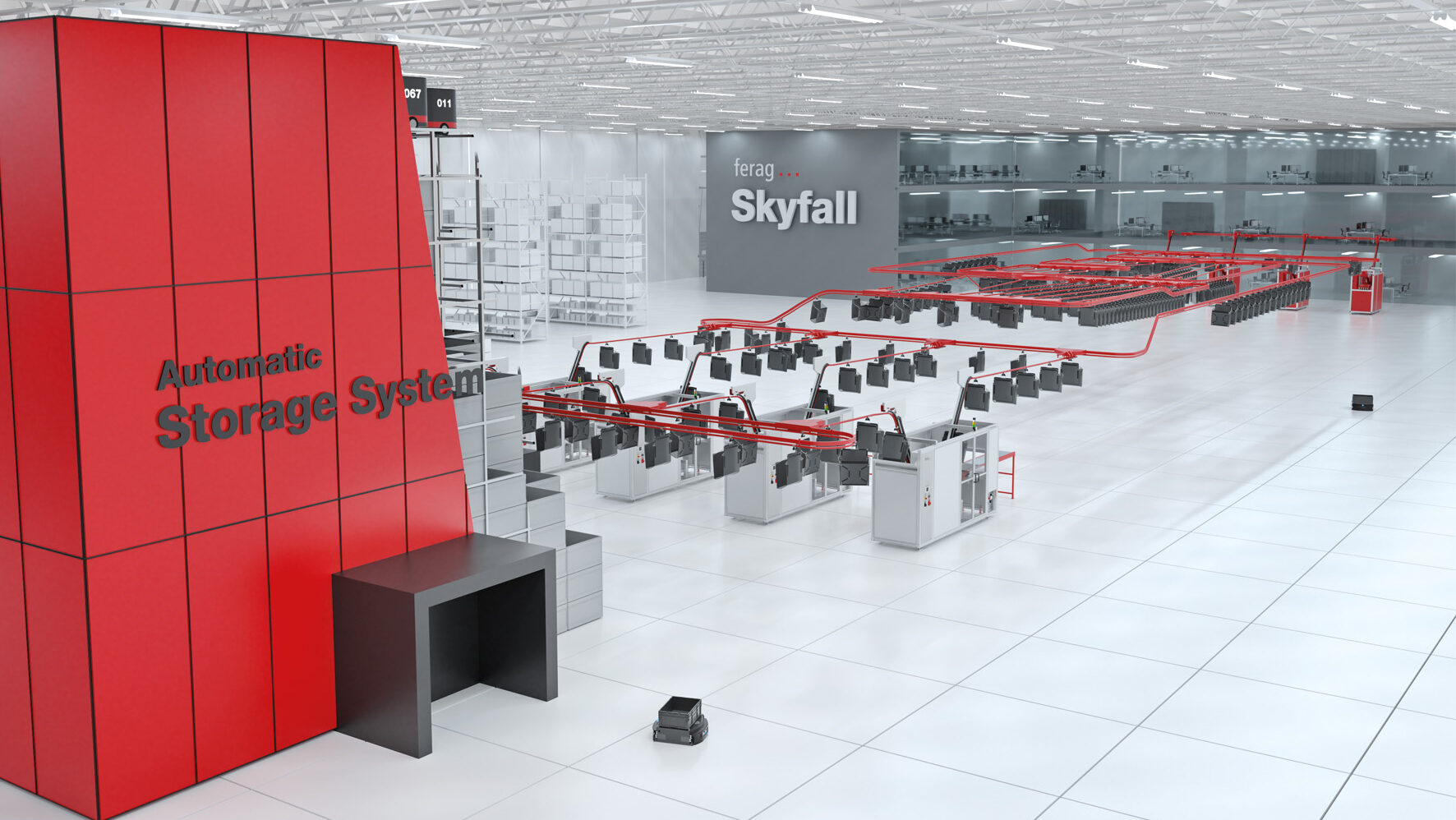
Volatile framework conditions and increasing competitive pressure are forcing companies in many industries to thoroughly review the costs of intralogistics. Ferag Solutions has responded by focusing on a comprehensive analysis of inventory management and the targeted use of automation technologies to optimize fulfillment processes.
New Approach to Cost Assessment
The company has developed a concept based on the metric CoOF (Cost of Order Fulfillment). This metric captures not only the direct costs of intralogistics but also considers all relevant factors such as labor, handling, space requirements, energy consumption, software, maintenance, and returns per processed order. By analyzing this data, companies can recognize how operational structures, the quality of processes, and the selection of specific technologies influence the profitability of inventory management. The CoOF factor allows for the evaluation of the benefits of investments based on concrete unit costs, resulting in more efficient management of fulfillment processes.
Identification of Savings Potential
With the CoOF approach, companies can identify error costs, personnel needs, and process risks at an early stage. This helps to reduce the complexity of order processing while improving performance and system availability. A significant savings potential lies in personnel costs, which often account for more than half of the total costs of order fulfillment. Errors in the areas of picking and consolidation can also incur substantial additional costs. In the fashion industry, for example, returns account for up to 35% of fulfillment costs, while delays reduce profit margins and tie up inventory. Additionally, space utilization plays a crucial role: while ground-based systems require a lot of space, vertical systems can increase space efficiency by up to 60%.
Automation as a Cost Factor
In practice, hybrid combinations of various technologies often prove effective in reducing operating costs. Autonomous mobile robots (AMR) offer flexibility and scalability but have a lower throughput compared to stationary automation solutions. Shuttle systems are suitable for e-commerce with high storage density but require high initial investments and are often rigidly arranged. Pocket sorters like *ferag.skyfall* combine sorting, buffering, and sequencing in one system and save energy, but require sufficiently large spaces for installation. By specifically applying the CoOF factor, companies can more accurately identify the most suitable solutions than is possible with conventional metrics.