


MBS Logistics acquires Gerhard Wegmüller GmbH in Zurich
May 22, 2025 at 7:22 AM
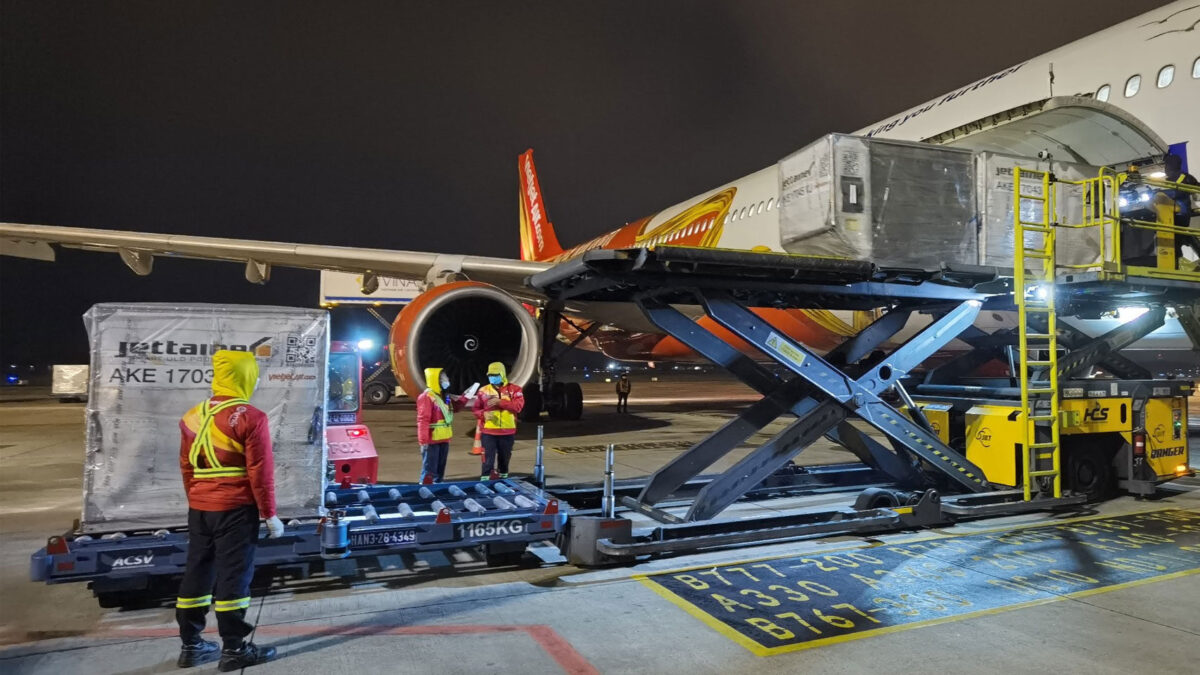
Swissport expands cargo capacities at Euroairport
Jun 7, 2025 at 12:41 PM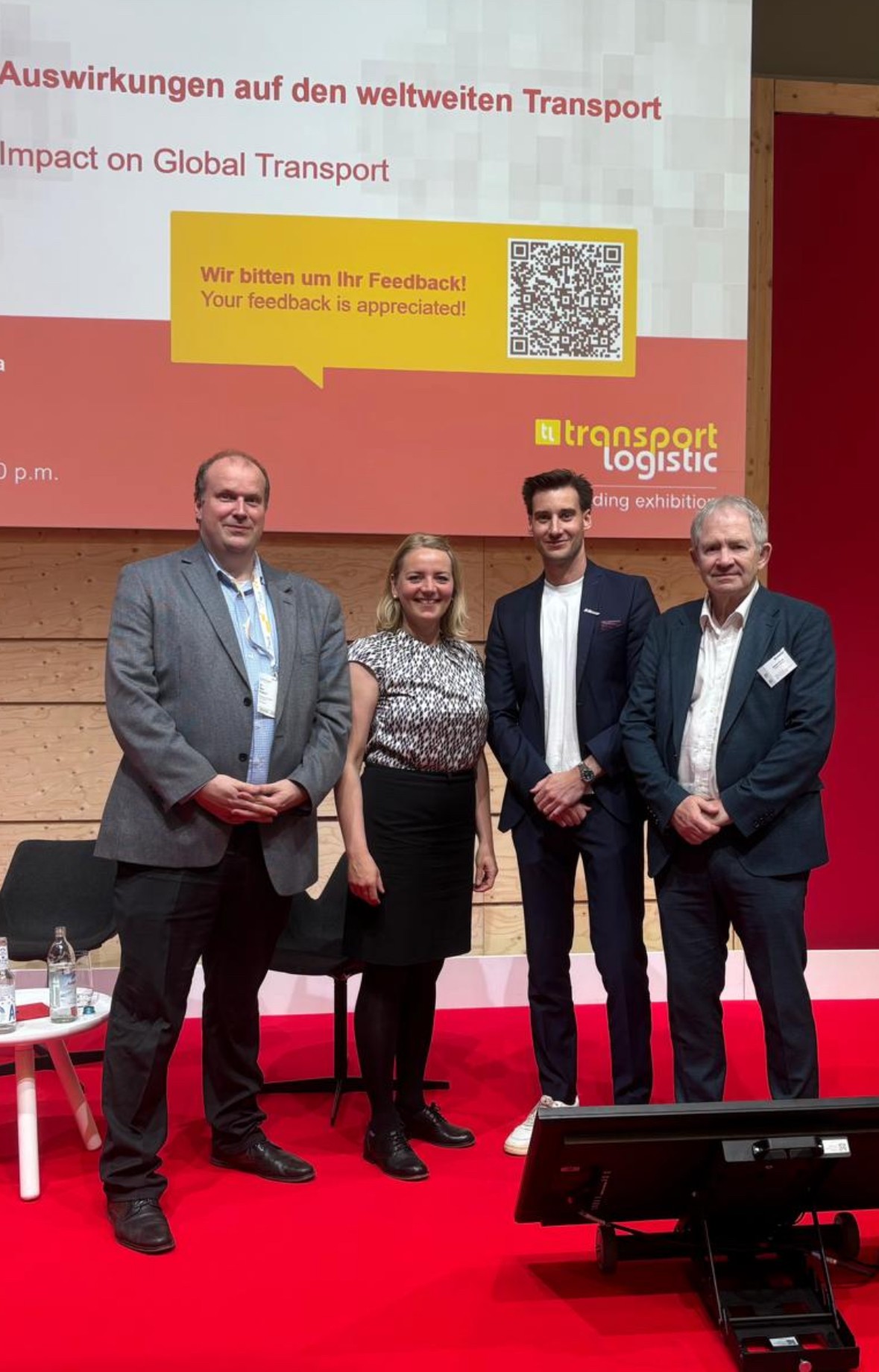
As part of a specialist forum at transport logistic 2025, the focus was on a technology that is increasingly demonstrating its potential to transform supply chains worldwide: industrial 3D printing. Under the title “3D Printing and Its Impact on Global Transport”, the session offered a mix of different perspectives on the topic. Andreas Müller from Logismedia Group AG moderated the program.
(Munich) Dr. Max Siebert, co-founder and managing director of Replique, opened the session by describing how industrial 3D printing has evolved from a niche solution to a globally scalable production alternative. Replique operates a platform that connects digital product data with a worldwide network of over 250 qualified manufacturing partners.
“We are experiencing a paradigm shift,” said Siebert. Instead of physical spare parts inventory, digital storage concepts are emerging, where design data is produced locally as needed. For manufacturers, this means reduced inventory, lower capital commitment, and accelerated response times. Using practical examples – such as a cooling water elbow for a ship engine or optimized hydraulic blocks – Siebert demonstrated how flexible, decentralized production enables 100% variable cost structures.
The automotive industry is also experiencing tangible change: “In a project with an OEM, we produced steering knuckles via 3D printing – from the request to the digital model to series production.” Replique offers not only production but also engineering, quality management, and system integration, for example in SAP Ariba. The logistics sector is directly affected: transport volumes are shifting, shipping routes are shortening – or may even be eliminated entirely.
From Warehouse to Printing Station: Seifert Logistics Emphasizes Decentralized Manufacturing
In the second presentation, Dr.-Ing. Fabian Frommer from Seifert Logistics Group examined the topic from the perspective of a logistics service provider. The central thesis: 3D printing can – when integrated into logistical processes – become a crucial differentiating feature. Frommer described how traditional concepts of spare parts logistics are shifting towards digital supply chains.
“The physical warehouse is replaced by the digital model,” he explained. In practice, this means: instead of producing for stock and transporting over long distances, spare parts can be generated directly at the destination. Frommer provided examples from internal process optimization and customer projects, where components such as air distributors or handle covers are produced decentrally and embedded as value-added services into logistical processes.
Complete integration is particularly important: from the CAD model through production planning to assembly. The logistics service provider is not displaced but takes on new roles – as a platform operator, quality manager, or supervisor of decentralized production networks.
Scientific Perspective: Supply Chains in Transition
The third contribution was made by Dr. oec. Katrin Oettmeier from OST – Eastern Switzerland University of Applied Sciences, who presented from both scientific and industrial perspectives how 3D printing is profoundly changing supply chains. The focus was on the question of what impact additive manufacturing has on central processes of supply chain management (SCM).
“New network structures are emerging,” said Oettmeier. Traditional links such as material suppliers or central production facilities may disappear, while new players – platforms, local printing service providers – complement the supply chain. The areas of procurement, product development, and quality management will be particularly affected. Oettmeier pointed out the high design freedom offered by 3D printing, which allows for functional integration and lightweight construction, as well as new requirements for employee qualifications and the handling of qualification data.
Regarding the transport sector, she made the following nuanced assessment: shipment volumes may tend to remain stable, but shipment weights could decrease due to lightweight construction and powder processing. Transport distances are currently still high – due to centralized production – but could significantly reduce in the medium term due to decentralization.
Strategic Turning Point for Logistics
The session made it clear: 3D printing is no longer a vision of the future but an increasingly mature component of industrial value creation. This opens up extensive opportunities for the logistics industry – for example, to reposition itself as a provider of intelligent, integrated production solutions.
The central keywords were: decentralization, platform economy, flexibility. Companies that adopt additive manufacturing early can not only optimize processes but also prepare against global supply chain risks.
Transport will not decrease due to 3D printing, but it may change. More transport with short distances and less transport, especially in the area of sea freight.
Photo: © Loginfo24 / Caption (l. to r.): Dr. Max Siebert (Replique), Dr. Katrin Oettmeier (Eastern Switzerland University of Applied Sciences), Dr. Fabian Frommer (Seifert Logistics), and Andreas Müller (Logismedia)