


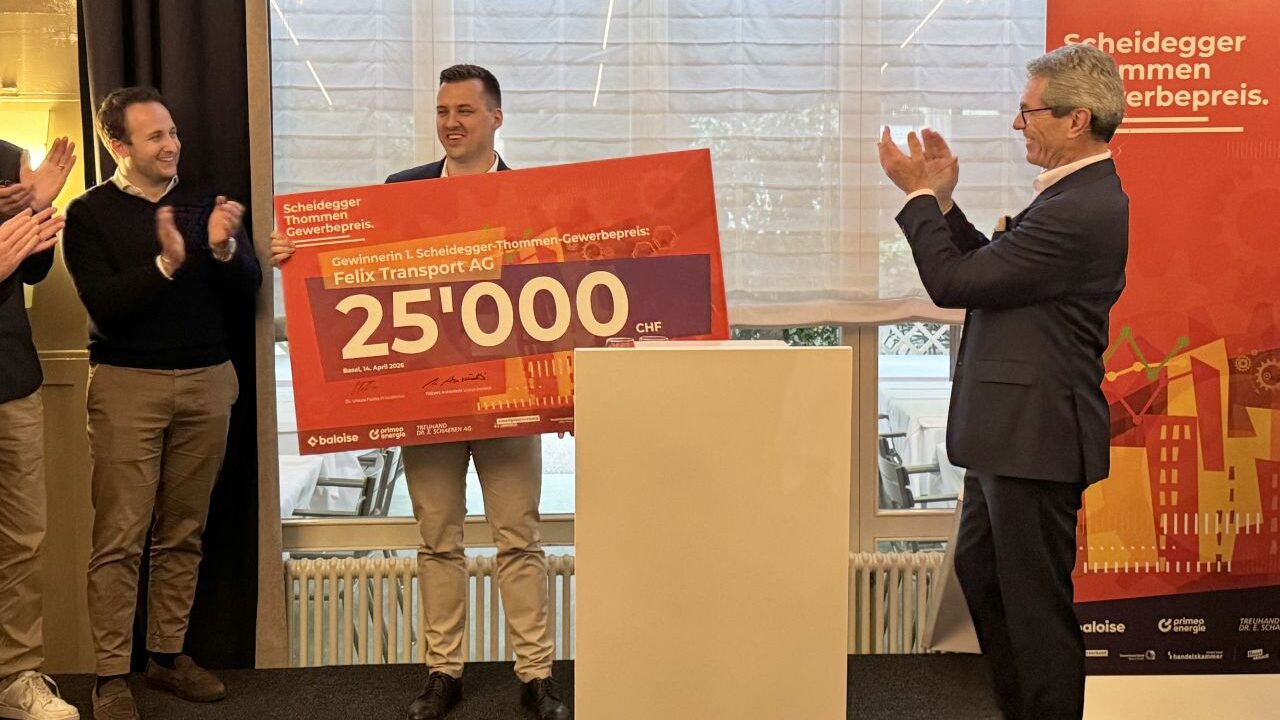
Felix Transport wins Scheidegger-Thommen Business Award
Apr 15, 2026 at 4:40 PM
Automated Mobility Summit 2026 in Zurich
Apr 17, 2026 at 8:18 AM
A recent survey by the compliance company NAVEX highlights that Swiss companies are strongly integrated into international supply chains and often terminate business relationships when risks arise. According to the study, 67 percent of surveyed companies in Switzerland have terminated at least one third-party relationship in the past year. On average, about 13.5 business relationships were ended. Particularly noteworthy is the international nature of these decisions: 70 percent of companies report that their offboarding decisions also affect business partners abroad, representing the highest value among the markets studied.
Risk of Disruption in International Supply Chains
The study also shows that 65 percent of companies in Switzerland experienced problems with suppliers or service providers in the last twelve months. The most common challenges are operational issues (35 percent), followed by regulatory difficulties (31 percent) and cyber as well as technological risks (29 percent). Despite these challenges, 85 percent of respondents are confident in their ability to identify risks early. However, only 21 percent feel „very confident“ in their ability to identify problems in a timely manner, which is the lowest value among the countries studied. Oliver Riehl, Regional Vice President Sales at NAVEX, explains that the complexity of international supply chains often leads to risks that arise at the interfaces of various regulatory requirements and technologies.
The economic consequences of such risks are also noticeable: 34 percent of companies report having lost business opportunities in the past year because they could not meet compliance or risk requirements.
The study also sheds light on the governance structures within companies. 67 percent of respondents see their boards fundamentally responsible for decisions in third-party management. Nevertheless, only 26 percent of respondents attribute full responsibility to the management. Additionally, only 54 percent desire a stronger involvement of senior management in these processes, which also represents the lowest value in international comparison. Riehl expresses concerns about this reluctance and emphasizes that without clear strategic responsibility at the board level, the overarching perspective on the entire risk landscape is often lacking.
Uncertainty in the Use of Artificial Intelligence
Another aspect of the NAVEX study is the handling of artificial intelligence (AI). Here, a pronounced uncertainty is evident: only 33 percent of surveyed companies feel prepared for upcoming regulatory requirements, which is the lowest value among the surveyed countries. While 80 percent of companies indicate that they have policies for the use of AI, only 29 percent find these policies to be very clear. Furthermore, only 29 percent of respondents use AI regularly or continuously. Particularly concerning is that 15 percent of companies cannot assess how frequently they use AI despite potential risks. Riehl warns of a growing governance problem and emphasizes the need for clear guidelines and transparency in dealing with AI.
The study was conducted in December 2025 and surveyed managers from B2B companies with more than 500 employees from Switzerland, Germany, France, the USA, the UK, and Scandinavia.