

Goods Traffic System Passar Launches with Imports in Switzerland
Jun 22, 2026 at 9:49 AM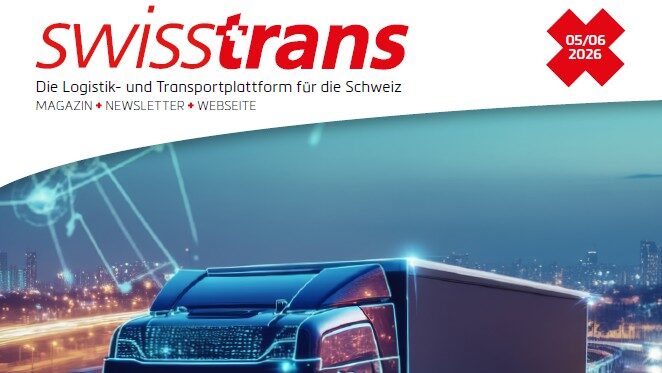
The new issue of the Swisstrans magazine addresses the current challenges and opportunities in the logistics and transport industry. The focus is on the topics of digitalization, artificial intelligence, and resilient supply chains.
The opening features a guest contribution by Andreas R. Obermeyer. He points out that the future of logistics does not lie in a contradiction between humans and technology. Rather, digital systems, automation, and artificial intelligence are valuable tools that complement and enhance human capabilities. The combination of technology, experience, and leadership skills will remain crucial in the future.
Another focus is the successful digitalization of transport and logistics companies. Using the example of DCL Transport GmbH, it is demonstrated how business processes can be fully digitized with the help of modern logistics software. At the same time, the article highlights the success factors in the implementation of new systems and the importance of integrated platforms for transport management, warehouse management, and customer management.
A further report deals with the strategic partnership between Log-hub and Hexaly. The two companies aim to significantly expand the analysis and optimization capabilities for supply chains. The goal is to provide companies with more powerful tools for network design, location planning, transport optimization, and data-driven decision-making processes.
Artificial intelligence is also at the center of the SCM Summit 2026 in Baden. The event organized by the Swiss Logistics Network Association (VNL) demonstrates how AI can help make supply chains more resilient, transparent, and secure. Experts from industry, trade, logistics, and technology discuss concrete practical applications and future developments.
In the field of rail logistics, the magazine reports on the Südostbahn (SOB), which is modernizing its maintenance logistics at the locations of Herisau and Samstagern. With the support of LOGSOL, the SAP Extended Warehouse Management system is being implemented to manage material flows more transparently and to secure the supply of workshops in the long term.
Further contributions address the presentation of new freight locomotives by SBB Cargo, the extension of federal funding for shifting freight to rail, and a traffic safety event by Galliker Transport, where children were able to learn about the world of road freight transport.
The issue is rounded off by two intralogistics topics. Gilgen Logistics demonstrates, using the example of Meier Tobler, how modern stacker cranes can improve efficiency and sustainability in high-bay warehouses. Additionally, Denner will rely on a new warehouse management system from EPG to further enhance the performance of its logistics processes.
The issue highlights that digitalization, data analysis, and artificial intelligence are increasingly becoming central success factors in logistics – both on the road and on the rail, in warehouses, and along global supply chains.